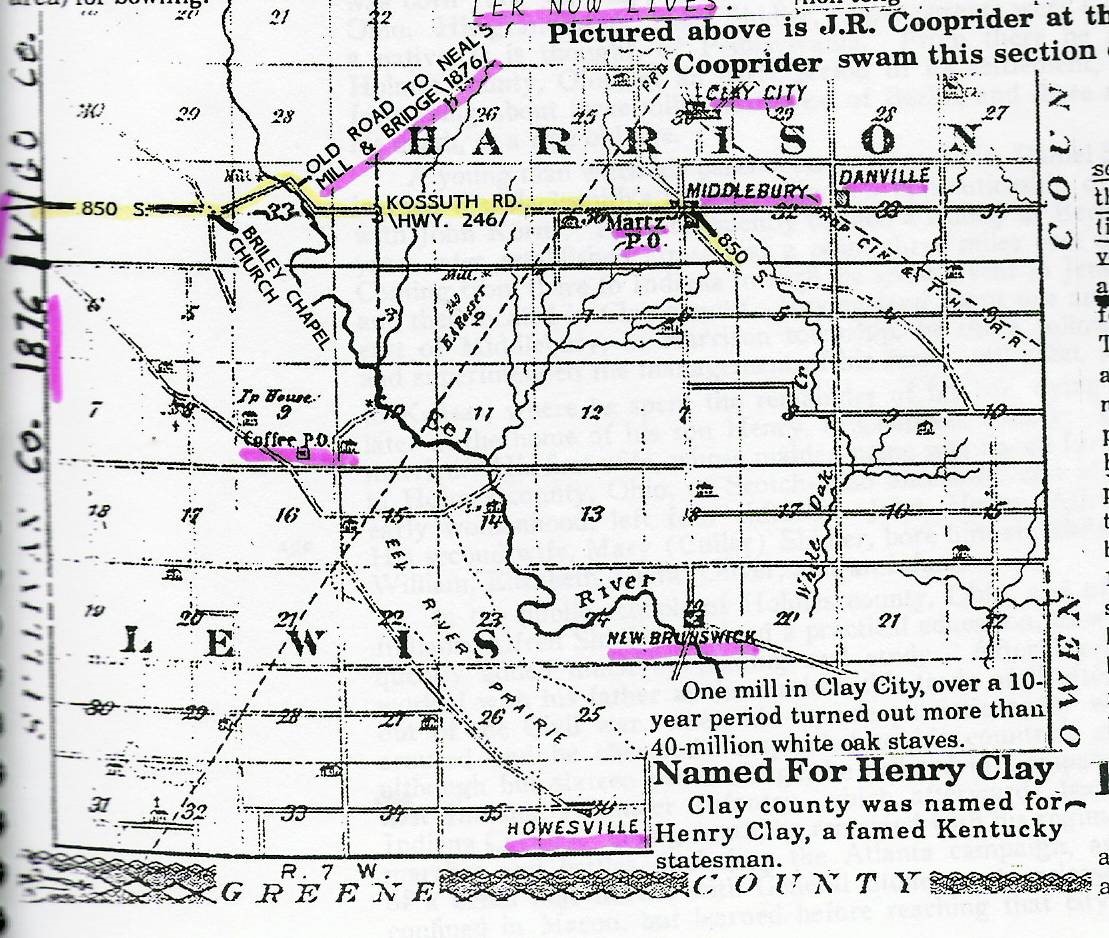
CCGS Members Go to Jail at Bowling Green
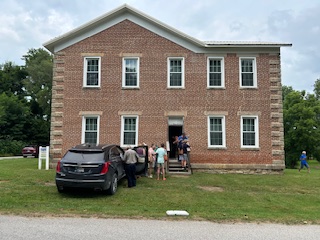 Members of the Clay County Genealogical Society held their 2025 July meeting at Bowling Green in the two-story brick Clay County Jail built in the early 1860s. Hosts for the afternoon were John and Nancy Lankford. The historic jail is a stately building on the corner Lafayette and Washington streets.
Nancy shared historical information and stories about the jail that was contracted to be built in 1861 by Wingate and Black for $3,750. The bricks were made at the east end of town on land where the seminary was later built. The two-story building has a crawl space under it, but it does not have a basement with cells as was previously claimed. The first floor is 12’ tall and the second floor is 11’ tall. There is an original walnut staircase leading to the second floor. The cell area has a 12” thick concrete floor. The other parts of the building have hardwood floors, as the building also served as a residence for the sheriff and his family.
Nancy shared several stories including the prisoners who stopped their escape one winter night when they decided it was better to be in jail than to freeze to death outside. Another story involved the hanging of the jailer’s black cat, Tom Feline, who was keeping the prisoners awake with its cries to escape their jail cell.
John and Nancy shared information about how they and previous owners have repaired the building to preserve it. A new roof was added, the bricks were tuck-pointed, and new windows were installed as well as several other repairs to improve the integrity of the building.
Over the years the jail has served several purposes. After the county seat was moved to Brazil in 1877, the jail served as a residence t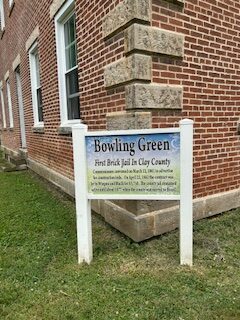 o several families. When the Bowling Green School burned in 1918, the younger students attended school in the jail, and the older students attended school at the undertaker’s business while a new school was being built. Later the jail served as a residence and an antique business. The Lankfords have plans for working on the inside of the jail to continue its preservation.